Why Traditional Offices Are Not the Best Model for Today’s Businesses
Most companies judge an office by its monthly rent. That is where the mistakes start.
The rent is the number on the quotation. The real cost sits behind it: the upfront spend before your first employee walks in, the lease you are tied to, the seats nobody uses and the time your team spends chasing vendors. For a growing business, those hidden items often cost more than the rent itself.
That is why so many companies in Pune are reconsidering the conventional lease and moving to a managed office in Pune instead. This guide explains why, in plain terms.
The Market Is Already Moving
This shift shows up in the leasing numbers. Colliers reported 18.3 million sq ft of Grade A office leasing across India’s top seven cities in Q1 2026. Flex space leasing rose 77% year-on-year to nearly 4 million sq ft, accounting for 21% of total leasing that quarter. construction world
Pune is part of the story. Cushman & Wakefield recorded 5.31 million sq ft of office leasing in Pune in the first half of 2026, and flexible workspace operators led demand in the second quarter. Across the country, flex operators accounted for nearly 20% of total office leasing in H1 2026, and Pune’s flex seat leasing grew 27.8%. cushmanwakefieldawazthevoice
Businesses are not abandoning conventional offices. They want speed, scalability and less operational burden alongside them.
5 Problems With the Traditional Office Model
1. High Upfront Investment
Before anyone sits down to work, a conventional office needs interiors, furniture, IT cabling, air conditioning, access control, meeting rooms and branding. That is a big cheque written before you earn a rupee from the space.
It is also a CapEx versus OpEx decision. Your capital gets locked into a physical asset that you may have to modify again as the team grows.
2. Long Lease Lock-In
Commercial leases commonly run three to five years or more, with lock-in periods and security deposits. Depending on the structure, there can be extra property-related costs on top.
The trouble is simple. Your business can change in six months. Your lease cannot.
3. Facility Management Overhead
Someone has to manage the internet provider, housekeeping, security, air conditioning, repairs, power backup and every vendor contract. In most growing companies that someone is an HR or admin person who was hired to do something else.
Enterprise teams add more: dual-ISP failover, access control systems and IT infrastructure backed by service-level agreements.
4. Paying for Space You Don’t Use
Say you lease 100 seats and, on a typical day, 70 are occupied. The other 30 still cost you rent, power, cleaning and maintenance.
This is why smart teams track usable versus chargeable area, average occupancy and cost per occupied seat. Those three numbers show what your office really costs.
5. Scaling Takes Too Long
Adding 20 people might mean new workstations, more network points, another meeting room or even another floor. Cutting down leaves you paying for space you no longer need.
Traditional real estate is fixed. Business needs are not.
See how a managed office solves this →
Look Beyond Rent Per Square Foot
Here is the formula we suggest every finance head uses:
“Rent + CAM charges + utilities + IT + maintenance + fit-out cost spread over the lease + facility staff + exit costs”
Also account for security deposits and restoration (dilapidation) costs at the end of the lease. When you add them all up, the office that looked cheaper on paper is often the more expensive one.
How a Managed Office Is Different
A managed office gives you a working workplace without asking you to build and run every part of it.
At Velvet Offices, we offer professionally managed workspace in Kalyani Nagar, Pune, with furnished private offices, meeting facilities, reception, internet, housekeeping and security. The wider setup includes boardrooms, meeting rooms and front-desk support, so you get corporate-grade facilities without creating them from scratch.
[Add here: number of suites, seat capacity and any 24/7 access or power backup details.]
The formats vary depending on team size:
- Private serviced suites for teams that want a lockable, dedicated space
- Enterprise-managed floors for larger teams that need scale
- Custom-built setups for companies with specific layout or branding needs
Explore our private office options →
Which Model Suits Your Business?
| Traditional lease | Coworking | Managed office | |
| Control | Highest | Lowest | High |
| Upfront capital | Heavy | Minimal | Minimal |
| Privacy | Full | Limited | Full (private, lockable) |
| Lock-in | Long | Short | Flexible |
| Facility management | Your responsibility | Included | Included |
| Best for | Large, stable teams | Freelancers, very small teams | Growing companies, enterprises, teams entering a new market |
A traditional lease gives you the most control, but you carry all the capital and operational load. Coworking is flexible, but it may not give an established team the privacy and corporate feel it needs. A managed office sits in the middle: a private, professional workspace with the infrastructure and day-to-day management handled for you.
A Practical Note on Workplace Quality
Workplace quality now matters to employees and to clients. Good air quality, ergonomic layouts, proper lighting and thoughtful design affect how people feel and work. For many companies, ESG expectations also influence where they choose to locate. A well-run managed workspace can meet these expectations without you handling each requirement yourself.
Why Kalyani Nagar Makes Sense
If you are looking at office space in Kalyani Nagar, the location is a big part of the case. It is close to the airport, established residential areas, hotels, restaurants and major corporate hubs, so it is convenient for employees, clients and visiting leadership alike.
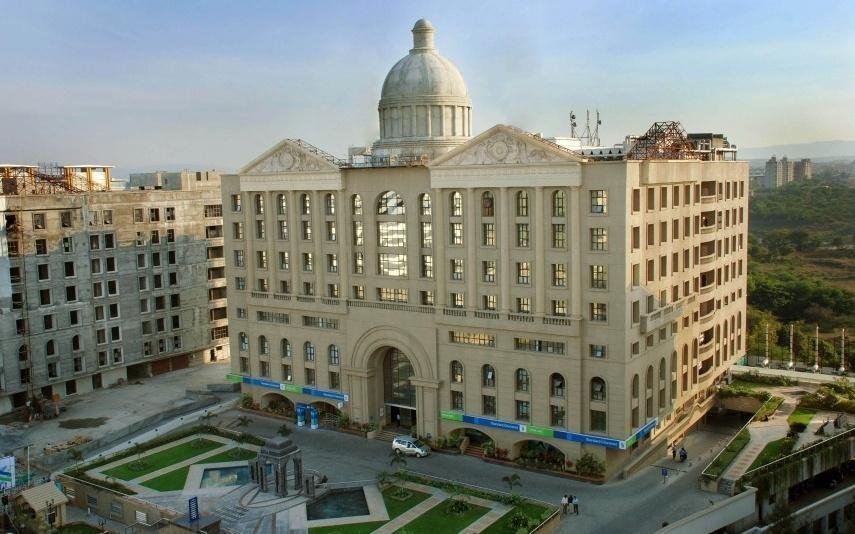
Our address is Unit No. 2, 2nd Floor, Marisoft 3, East Tower, Kalyani Nagar, Pune 411014.
Need a space for a few hours or a day before committing? Our day pass and meeting rooms let you try the workspace first. You can also see what is included on our amenities page.
Schedule a Workspace Walkthrough →
Conclusion
The real drawback of a traditional office is not the rent. It is the commitment behind it: capital tied up in fit-outs, long leases, unused capacity, vendor management and exit obligations.
As flexible workspace becomes a bigger share of India’s office market, businesses have more choices than the conventional lease. For companies that want flexibility without giving up privacy or professionalism, a managed office is a practical middle path.
Frequently Asked Questions
What is the main disadvantage of a traditional office lease?
The long-term commitment. Upfront fit-out cost, lock-in periods, deposits and exit costs can tie up capital and limit your ability to scale up or down.
Is a managed office cheaper than a traditional lease?
It depends on your team size and how long you stay. Compare total cost, including fit-out, utilities, IT, maintenance and staff time, rather than rent alone.
Who should choose a managed office?
Growing companies, enterprises opening a new location, and teams that want a private, professional space without building one.
Is a managed office the same as coworking?
No. Coworking usually means shared, open space. A managed office gives you a private, dedicated space with services handled by the operator.
Can I see the space before deciding?
Yes. Contact our team through the contact page to book a walkthrough.
Thinking About Your Next Office?
Before you sign another long-term lease, ask for a tailored workplace audit and quote.
Book a Workspace Walkthrough | Explore Managed Offices | Get a Day Pass